





















Latest Advances in Crop Yield and Disease Prediction Technologies
The article "Latest Advances in Crop Yield and Disease Prediction Technologies" explores how modern agriculture is being transformed by digital innovations that enhance both productivity and sustainability. It highlights the integration of technologies like satellite imagery, remote sensing, IoT devices, and AI-driven analytics in monitoring crop health and forecasting outcomes. With the help of Crop Yield Prediction Software, farmers can now make data-informed decisions to optimize resource use and plan more effectively. Similarly, Crop Disease Prediction tools enable early detection of potential threats through environmental monitoring and image-based diagnostics. These advancements are reshaping farming practices, making them more precise, proactive, and resilient against climate and pest-related challenges.

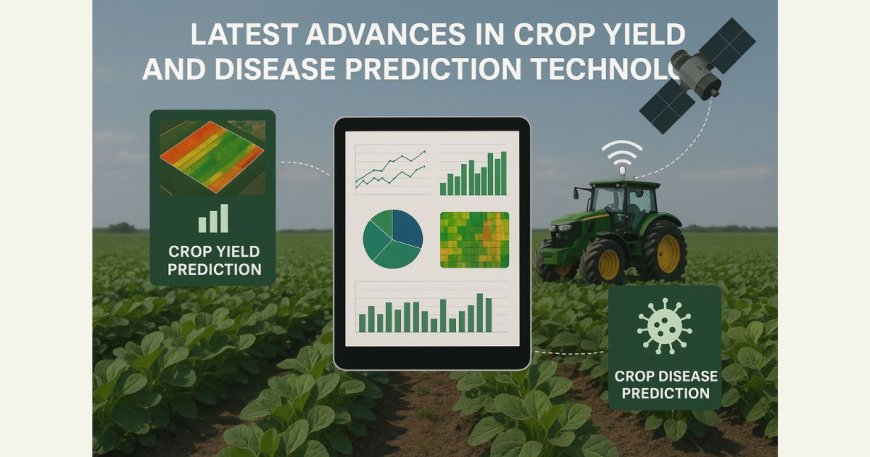
In the face of a growing global population, climate variability, and limited agricultural land, the ability to maximize crop productivity while mitigating losses has never been more critical. Modern agriculture is increasingly reliant on data-driven technologies to address these challenges. Innovations in remote sensing, machine learning, and precision farming have significantly enhanced the accuracy and reliability of both crop yield forecasting and disease management. The integration ofCrop Yield Prediction Softwareinto farming practices has revolutionized decision-making, enabling farmers to optimize resources and improve outcomes with minimal environmental impact.
The Role of Data in Modern Agriculture
The advent of digital agriculture has transformed the way farms are managed. At the heart of this transformation is the use of big data. Todays farms generate a wide array of datafrom satellite images and drone footage to soil health sensors and weather monitoring systems. When analyzed correctly, this data provides actionable insights into plant growth patterns, soil conditions, and potential stress factors.
Machine learning models analyze this complex data to identify correlations and patterns that are otherwise undetectable through manual observation. These insights allow for more accurate predictions regarding yield outcomes and disease outbreaks, often well before symptoms are visible to the human eye.
Satellite Imagery and Remote Sensing
One of the major breakthroughs in predictive agriculture has been the integration of satellite imagery and remote sensing technologies. These tools allow for real-time monitoring of large farming areas, capturing detailed data on vegetation indices such as NDVI (Normalized Difference Vegetation Index), canopy cover, chlorophyll levels, and moisture content.
These indicators are essential for yield estimation and early detection of plant stress, which may be due to disease, pests, or nutrient deficiencies. By continuously monitoring crop health, farmers can respond proactively rather than reactively, minimizing losses and improving productivity.
AI and Machine Learning in Yield Forecasting
Artificial intelligence (AI) plays a critical role in enhancing the precision of yield forecasting. By analyzing historical crop performance, weather patterns, and real-time data from sensors, AI models can generate predictive insights tailored to specific crops, regions, and farming practices.
Several startups and agri-tech firms have developed sophisticated platforms that combine AI with geospatial data and agronomic models to forecast yields. These models are continuously refined using feedback loops, making them more accurate over time. Farmers and agribusinesses use these predictions to plan logistics, pricing strategies, and market supply chains effectively.
Crop Disease Prediction and Management
Alongside yield prediction, the prevention and control of crop diseases have seen significant advancements through digital technology.Crop Disease Predictiontools now leverage machine learning, computer vision, and pathogen detection algorithms to forecast the onset of diseases before they spread.
One prominent application is the use of smartphone-based diagnostic tools that analyze images of plant leaves for signs of disease. These tools are trained on extensive datasets comprising thousands of images and can diagnose conditions such as blight, rust, mildew, or viral infections with remarkable accuracy.
Additionally, environmental factors such as humidity, temperature, and wind speed are incorporated into disease prediction models. By understanding the environmental conditions favorable to specific pathogens, predictive systems can alert farmers to take preventative action, such as applying targeted treatments or adjusting irrigation schedules.
Internet of Things (IoT) and Smart Sensors
IoT-enabled devices are another cornerstone of predictive agriculture. Soil moisture sensors, weather stations, and plant health monitors feed continuous data into cloud-based platforms, creating a real-time overview of field conditions.
This information is crucial for both yield and disease forecasting. For instance, sudden changes in soil temperature or moisture levels can indicate a risk of root diseases or fungal infections. Smart irrigation systems, informed by sensor data, can also optimize water usage, contributing to healthier crops and better yields.
The use of these sensors significantly reduces the need for blanket treatments across entire fields, supporting a more sustainable and cost-effective approach to agriculture.
Integration of Predictive Systems in Precision Agriculture
The synergy between predictive technologies and precision agriculture practices has led to a new era of smart farming. By localizing treatment and input application to specific areas within a field, farmers can manage variability with pinpoint accuracy.
For example, yield maps generated from previous seasons combined with real-time data allow for the variable-rate application of fertilizers and pesticides. This not only boosts productivity but also minimizes environmental impacts, such as runoff and soil degradation.
Furthermore, predictive insights help farmers decide the best time to plant or harvest, reducing exposure to adverse weather and optimizing crop maturity for peak market demand.
Blockchain and Data Transparency
While prediction technologies rely heavily on data collection and analysis, data integrity and transparency have also become critical issues. Blockchain technology is now being explored to ensure the credibility and traceability of agricultural data.
By creating immutable records of inputs, field activities, and environmental conditions, blockchain can verify the authenticity of yield predictions and disease alerts. This transparency is particularly valuable in contract farming and supply chain management, where trust between parties is essential.
Challenges and Future Outlook
Despite these promising advances, several challenges remain. High initial costs, limited digital literacy among farmers, and inconsistent internet connectivity in rural areas can hinder adoption. Additionally, predictive models may still face limitations due to the unpredictable nature of weather and the complexity of biological systems.
However, the future is optimistic. Continued investment in research and development, government support for digital infrastructure, and collaborative platforms involving scientists, agronomists, and farmers are paving the way for broader implementation of predictive technologies.
Emerging trends such as edge computing, real-time genomics, and quantum computing may soon further enhance the capabilities of these systems, making prediction models faster, more accurate, and more accessible to farmers around the globe.
Conclusion
The integration of advanced technologies into agriculture is revolutionizing how crops are grown, monitored, and protected. From satellite imagery and machine learning to IoT devices and blockchain, each innovation contributes to a smarter, more resilient food system. By leveraging these tools, farmers can anticipate problems before they occur, allocate resources more efficiently, and ultimately ensure higher yields and healthier crops. As the technology continues to evolve, its potential to transform agricultureand ensure food securitybecomes ever more profound.